Cap and closure presence
Confirm a cap, lid, pump, spray head, plug or other required closure feature is fitted.
Detect missing, high, skewed or incorrect closures, visible seal-area faults and out-of-limit fill levels at production speed.
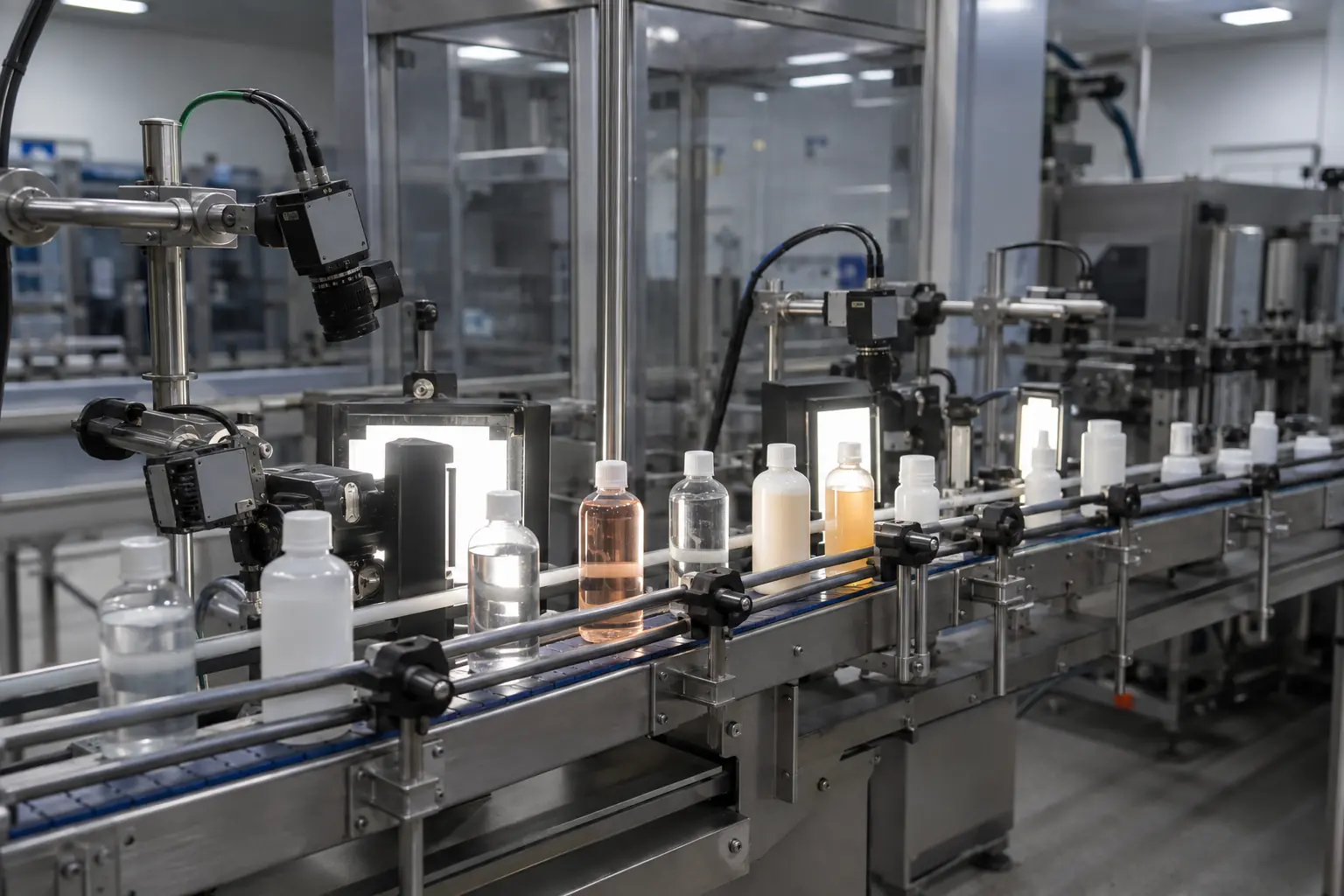 Application-led imaging Proved with the real product, defect and line conditions.
A vision system can measure visible closure position, confirm a cap or tamper feature is present, inspect an exposed seal area and compare a visible liquid or product level with agreed limits. Multiple views may be needed for shaped containers or complete coverage.
Every check is confirmed against the real product, defect set, line speed and production environment before final specification.
Confirm a cap, lid, pump, spray head, plug or other required closure feature is fitted.
Measure closure height, angle and position against the agreed container reference.
Check visible band presence, colour, position or damage where the feature can be clearly imaged.
Measure a visible liquid, powder or product boundary against minimum and maximum limits.
Identify contamination, folds, tears or incomplete visible regions in a proved viewing arrangement.
Combine closure, level, label, code and container checks into one tracked product decision.
Container colour and transparency, bubbles or foam, reflective materials, product meniscus, cap variation, line vibration, product rotation, defect visibility and the limits that distinguish acceptable process variation.
The camera result can be combined with container tracking and a reject confirmation sensor. Recipes support changeovers, while selected result images and measurements can be made available for production and quality review.
Vision only confirms visible features. It does not detect invisible contamination, prove torque, measure pressure or guarantee a hermetic seal unless a separate suitable test is integrated. We state exactly what the camera decision does and does not cover.
Use these related pages to compare the inspection methods and production environments that may form part of the project.
It can detect visible signs such as excessive height, skew or a missing feature. If looseness is not visually measurable, a torque or other physical test may be required.
Often, yes, when the container and product create a stable visible boundary. Coloured containers, foam, bubbles and opaque products must be assessed during trials.
It can detect agreed visible seal-area contamination, folds, damage or missing regions. It does not automatically prove an invisible leak or seal strength.
Yes. Cameras and inspection tools can be coordinated into one tracked result when line layout, timing and resolution support every check.
Send us samples, images, line-speed information and the defects you need to detect. We’ll recommend the right next step.