Correct label or artwork
Compare stable graphics, colours, shapes or a decoded identifier with the selected product recipe.
Check every pack for the correct label, position, printed data and visible packaging defects before dispatch.
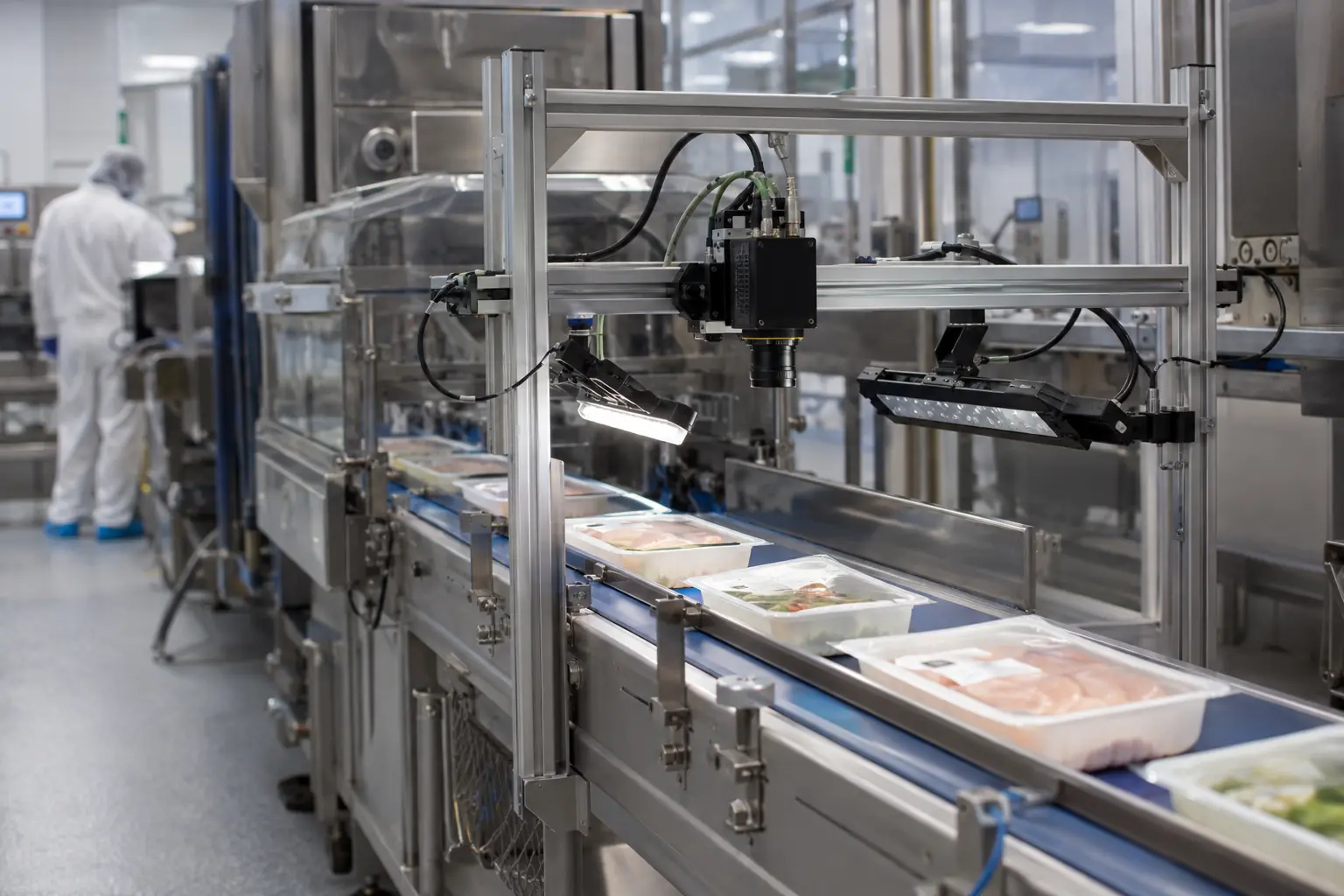 Application-led imaging Proved with the real product, defect and line conditions.
A label inspection system uses one or more controlled camera views to confirm that a label is present, belongs to the current product, sits within agreed position limits and carries the required visible print or codes. The result can trigger automatic rejection and an inspection record.
Every check is confirmed against the real product, defect set, line speed and production environment before final specification.
Compare stable graphics, colours, shapes or a decoded identifier with the selected product recipe.
Measure horizontal and vertical position, rotation, skew and the allowed label area.
Coordinate multiple camera views when one image cannot see every important face of the pack.
Combine label verification with OCR or OCV checks for variable printed information.
Decode and compare EAN, linear barcode, QR or Data Matrix values where specified.
Detect label folds, tears, missing regions or presentation faults that are visible in the proven view.
Pack presentation, label material, glare, print position, product rotation, film wrinkles, condensation, line speed, recipe control and how the system establishes that the label is the correct one.
A label result can combine identity, location, code and packaging checks into one pass/fail decision. Multi-camera layouts can cover top, bottom, side or wraparound areas, while the controls track each pack to the reject point.
Vision verifies what the camera can see. It does not itself prove adhesive strength, hidden label content or seal integrity. Text and artwork claims are defined feature by feature and proved on the actual pack range.
Use these related pages to compare the inspection methods and production environments that may form part of the project.
Yes, using stable artwork features, colour, shape, text or a decoded product identifier. The method is chosen around the variation between label versions.
Yes. Two or more synchronised cameras can inspect different faces and combine the results before the pack reaches the reject point.
It can verify agreed visible text, codes, artwork regions or label identity. The exact scope must be defined because a camera does not replace the business process that controls approved artwork and product data.
Often, yes, where there is enough viewing distance, controlled lighting, product spacing, guarding and reject space. A line survey establishes the practical layout.
Send us samples, images, line-speed information and the defects you need to detect. We’ll recommend the right next step.