Date and expiry codes
Check use-by, best-before or expiry text against the expected format and production recipe.
Automatically read or verify date codes, batch numbers, lot codes, serial marks and machine-readable codes before the product leaves the line.
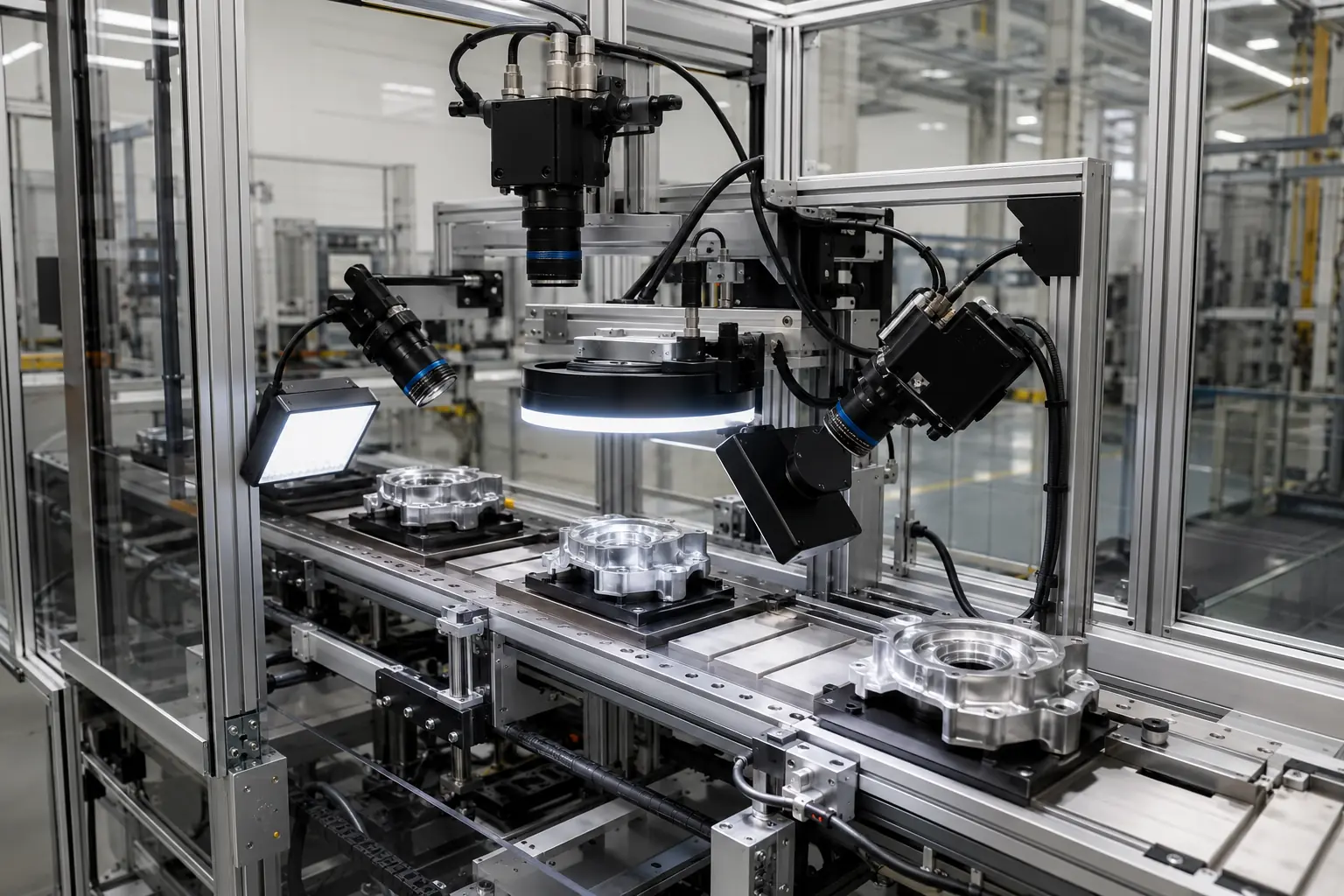 Application-led imaging Proved with the real product, defect and line conditions.
OCR reads characters when the content may vary; OCV compares printed characters with an expected value. A production system can combine either method with barcode or Data Matrix decoding, print-presence checks, product tracking and an automatic reject response.
Every check is confirmed against the real product, defect set, line speed and production environment before final specification.
Check use-by, best-before or expiry text against the expected format and production recipe.
Read or verify variable alphanumeric strings printed, etched, moulded or scribed on the product.
Decode 1D or 2D symbols and compare the returned value with the job, product or database record.
Confirm the code exists in the correct print area before attempting to read or verify it.
Detect missing, weak, joined or damaged characters where the agreed image criteria make them visible.
Send pass/fail data to the PLC, retain selected images and remove the correct failed product.
Print contrast, font and character size, surface curvature, reflections, product movement, code position, line speed and the full range of acceptable print variation.
The result can be tied to a product recipe or identifier, passed to a PLC or production database, and used to reject, divert, stop or alert. Storage requirements for good images, failed images and decoded strings are agreed during specification.
A camera cannot recover information that is not optically present. Embossed, low-contrast, reflective or distorted marks may need specialised lighting, more resolution or a different viewing angle. We test real good and failed samples before fixing the method.
Use these related pages to compare the inspection methods and production environments that may form part of the project.
OCR reads characters and returns the recognised text. OCV verifies that visible characters match an expected string, pattern or production value.
Yes, subject to print quality, contrast, character size, surface shape and line presentation. The system can check presence, position, format and, where required, the actual value.
Often, yes. Resolution and viewing conditions must support both tasks, and the decoded values can be compared with each other or with the current product recipe.
Provide representative good print, known failure modes, all fonts and product variants, expected line speed and examples from the weakest acceptable print condition.
Send us samples, images, line-speed information and the defects you need to detect. We’ll recommend the right next step.