Product tracking
Maintain the identity of the failed item between camera and reject despite normal line movement.
A correct camera decision only protects production when the intended failed product is removed or the line responds in a controlled, verifiable way.
 Application-led design Proved against the real product, defect and production conditions.
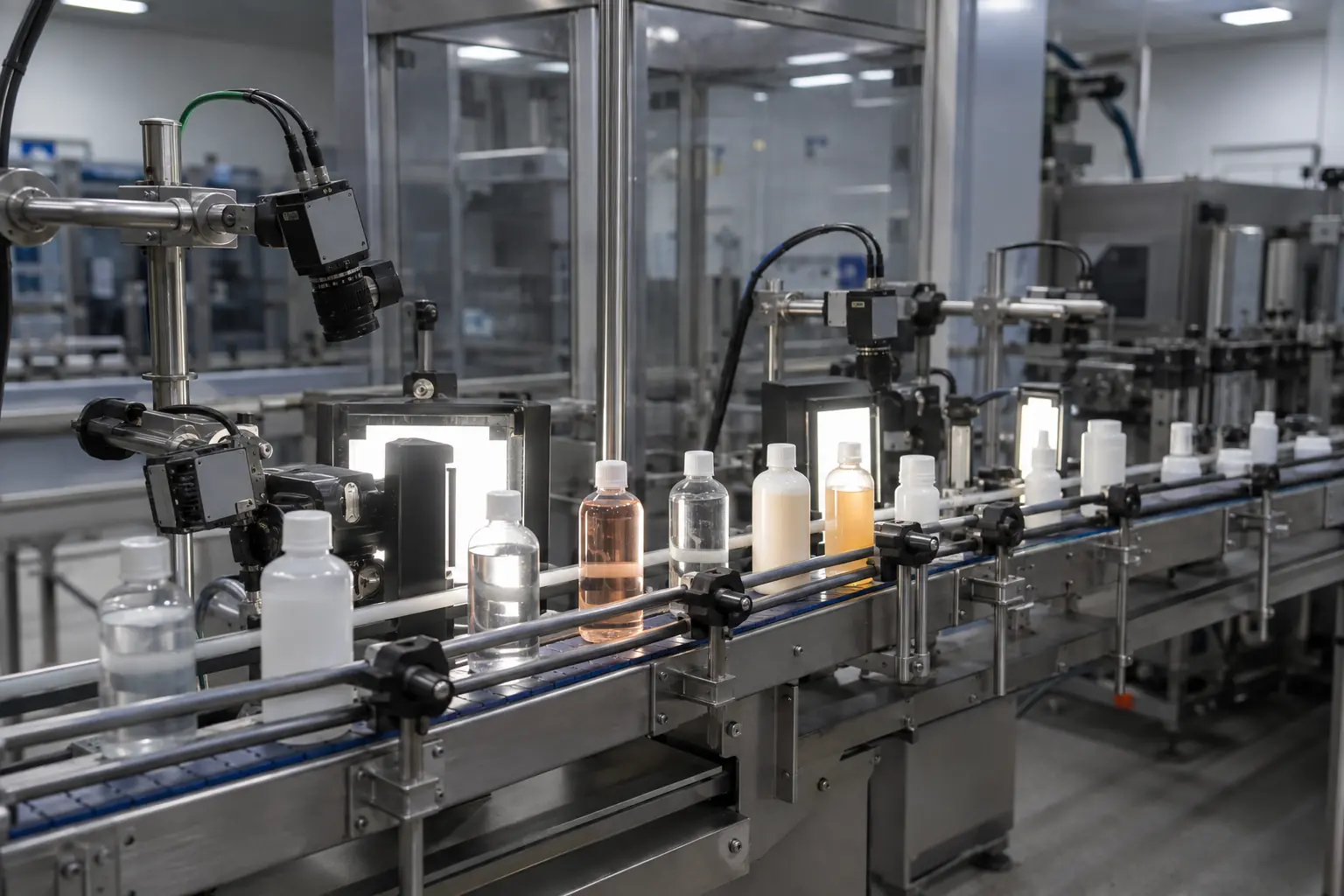
The inspection result is associated with a specific product, tracked to the reject point and used to actuate a suitable removal or diversion device. A robust design can monitor the reject mechanism, confirm the product entered the reject route and generate a controlled alarm or stop if rejection cannot be proven.
Each requirement is tested against representative products, normal variation, line speed and the agreed production response.
Maintain the identity of the failed item between camera and reject despite normal line movement.
Choose pusher, air blast, swing arm, drop flap, retracting belt, lane diversion or stop response around the product.
Use suitable sensing to confirm the expected product passed into the reject route rather than relying only on an output signal.
Monitor full-bin, bin-present, door or collection conditions where the application risk requires it.
Define controlled behaviour for lost air, actuator fault, blocked product, disabled inspection or maintenance bypass.
Log the inspection result, reject command and confirmation event where production evidence is part of the scope.
Weight, stability, fragility, speed, spacing and pack shape determine which reject mechanisms are practical.
The controls need a reliable tracking window between inspection and rejection, including acceleration, conveyor transfer and line-stop behaviour.
The agreed risk determines whether loss of confirmation creates an alarm, stops the line, blocks release or requires operator intervention.
The useful result is a repeatable decision that operators can understand and the production line can act on.
Confirm speed, spacing, mass, stability, fragility and allowable handling.
Measure the distance, tracking method, conveyor transfers and downstream risk.
Agree actuator, air, bin, confirmation, bypass and fault-state signals.
Test good, failed, consecutive rejects, full bin, lost air, blocked route and line stops.
A camera can correctly classify a product while the physical reject still fails because of poor spacing, a jam, lost air or a displaced bin. Treating detection, product tracking, reject actuation and confirmation as separate testable stages makes the complete system easier to prove.
It depends on product weight, stability, fragility, line speed, spacing and available conveyor length. The mechanism should be selected from real product trials rather than by camera type.
Reject confirmation uses an independent signal or sensor to show that the intended failed product entered the reject route. It is different from confirming that the reject output was switched.
It can be designed to, but the maximum reject rate, actuator recovery time, product spacing and bin capacity must be included in the specification and acceptance test.
Yes. A controlled stop, alarm, machine inhibit or diversion may be more appropriate where the product cannot be safely removed at speed.
Often, subject to conveyor control, available length, guarding, product stability and a reliable tracking distance between inspection and reject. A survey confirms whether modifications are needed.
Send samples, images, line-speed information and the defects you need to detect. We’ll recommend the right next step.