Label presence and identity
Confirm that the expected label or artwork is present for the active product recipe.
Verify the right label and readable variable data on every product or pack. We integrate cameras, controlled lighting, recipe data, line tracking and a defined reject response.
A label, print and code inspection system uses machine vision to confirm that required identification and variable data are present, correctly positioned and readable before a product leaves the line.
OCR reads printed characters. OCV verifies characters against expected recipe or production data. Dedicated code tools locate and read 1D barcodes, QR codes and Data Matrix symbols. The inspection can combine those checks with label identity, position, skew and artwork-region checks in one tracked decision.
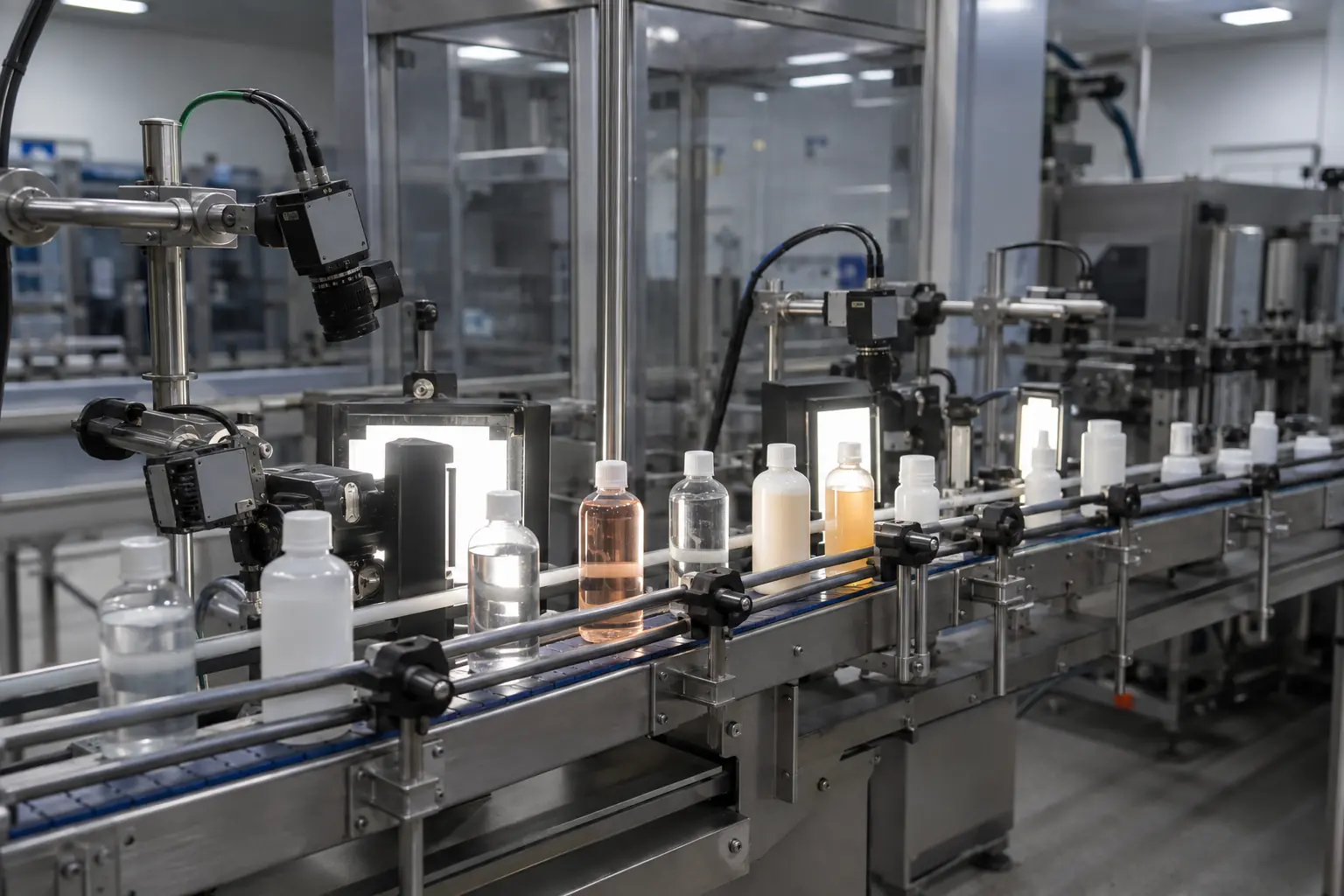 Application-led design Prove the image and line response before final specification.
The final scope depends on print method, contrast, pack curvature, line speed, product variation and the data source used for verification.
Confirm that the expected label or artwork is present for the active product recipe.
Measure label placement against agreed limits and identify folded or poorly applied labels.
Detect missing or unreadable variable print and verify the captured text where a reliable reference is available.
Read characters or compare them with expected production data instead of relying on presence alone.
Locate and read 1D and 2D codes, then pass the decoded value into the agreed verification workflow.
Check the presence of visible marks, panels or defined print regions without claiming legal-content approval.
The inspection must work with real product variation, line timing and operator responsibilities—not only a laboratory image.
Agree the label, print fields, code type, reference data and acceptance rules.
Create a stable view despite gloss, curvature, movement and ambient factory light.
Apply label tools, OCR, OCV or code reading against the active production recipe.
Track the product to rejection and retain the agreed result, image or decoded value.
Use OCR when the characters themselves must be read, OCV when visible text must match an expected string, and dedicated barcode verification when a machine-readable code must be located and decoded. A production system can combine all three, but each needs its own image-quality and acceptance criteria.
OCR reads characters from an image. OCV compares visible characters with an expected value. OCV is often preferred where the correct date, batch or product string is already available from the line recipe.
Yes, if the print is visible with adequate contrast and resolution. Sample testing should include normal print variation, poor print, missing characters and the fastest production condition.
Often, yes. One inspection can combine label presence and position with 1D barcode, QR or Data Matrix reading when the views and timing allow.
Usually, but the optical design matters. Diffuse, polarised or multi-view lighting may be required to control reflections and see around curved containers.
Reading a code confirms that the system can decode it under the installed conditions. Formal print-quality grading or standards compliance must be specified separately with suitable equipment and acceptance criteria.
Send us samples, images, line-speed information and the defects you need to detect. We’ll recommend the right next step.